


Tailored for Africa: Durable Cassava Processing Equipment Built for Local Conditions
Are you struggling with frequent equipment breakdowns, power insufficiency, and months of waiting for spare parts? If you process cassava in Africa, you know these challenges intimately. These are not minor inconveniences—they are the daily realities that hold African cassava processors back. But they are not insurmountable. At Henan Jinrui, we listened to these challenges and engineered a complete range of cassava processing equipment specifically for African conditions—durable, power-flexible, locally maintainable, and designed to maximize your profitability.
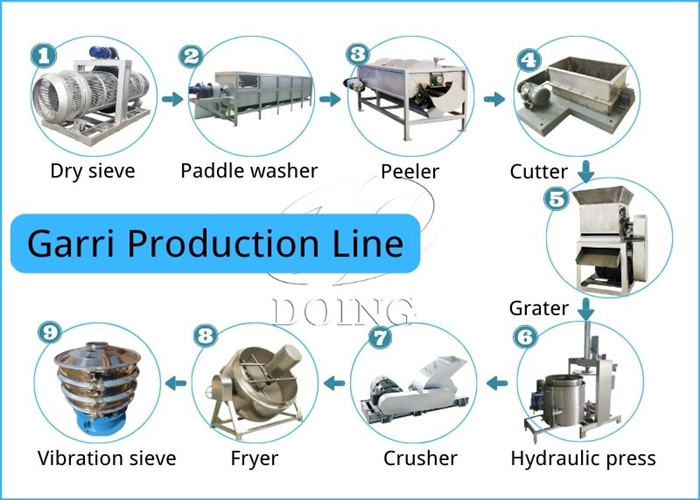 cassava to garri processing line
Built to Survive Africa's Toughest Environments
African cassava processing happens where the cassava grows—in rural areas with dusty roads, high humidity, and open-air facilities. Our cassava processing equipment is engineered for this reality, not against it.
Heavy-Duty Construction That Lasts
Every cassava processing machine in our line features robust, food-grade 304 stainless steel at all product contact points, ensuring hygiene and easy cleaning. But we go further. We use corrosion-resistant materials throughout, protecting against the humidity that rusts lesser machines. Sealed bearings and enclosed motor housings keep dust and moisture out, dramatically extending operational life even in the most challenging environments.
Built to Handle Variable Power
We know that reliable grid electricity is not a given in many processing areas. Our designs account for this:
Motors are compatible with the voltage fluctuations common in rural grids.
Critical models (like cassava grinder) offer direct coupling to diesel engines, allowing independent operation.
Energy-efficient components reduce generator fuel consumption, lowering daily operating costs.
Designs incorporate options for alternative energy sources like diesel, gas, or simple manual operation
Nigerian Branch Office Supported for Local Maintenance
The true cost of imported cassava processing equipment isn't the purchase price—it's the downtime. When a specialized part fails, production stops, and weeks of waiting begin. Our philosophy eliminates this vulnerability.
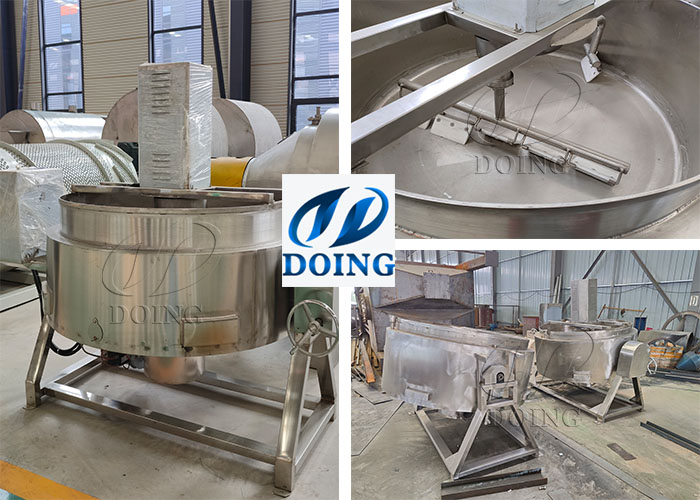 garri fryer with three heating system
Tool-Free Access and Simple Adjustments
We engineered our cassava processing machines for the people who use them daily. Key components are accessible without specialized tools. Daily cleaning and routine adjustments can be performed by any operator after minimal training. This means your line stays hygienic and running smoothly without waiting for a technician.
Locally Available, Standardized Parts
Where possible, we use standardized bearings, belts, and fasteners that can be sourced from local suppliers. For specialized wear components—like cassava grater teeth or peeler rollers—we maintain comprehensive inventory at our Nigeria branch for rapid dispatch. No more weeks of waiting for overseas shipments.
Modular Design, Minimal Production Loss
Our cassava processing equipment is modular by design. If a component requires service, it can be swapped quickly while repairs happen offline. This "plug-and-play" approach keeps your production moving and your profits flowing.
Do you wanna buy cassava processing equipment engineered for local conditions in Africa? Tell us your capacity and requirements, and our local manager in Ogun state will discuss details with you!
contact us
- Do you want to buy machine?
- Yes, I want to buy machine
- No, I want to learn more in advance.
- What is your raw material?
- Cassava
- Potato
- Sweet potato
- Other:
- What is the final product you want to produce?
- Chips
- Flour
- Starch
- What is the final product you want to produce?
- Garri
- Cassava flour
- Cassava starch
- Cassava chips
- Attiekie
- Bammy
- Other:
- What is your planned capacity for final product?
- <1 ton per day
- 1 ton per day
- 2 tons per day
- 3 tons per day
- 3-10 tons per da
- 10-20 tons per day
- >20 tons per day
- What is the usage of your cassava chips?
- Food usage (like fried chips, flour)
- Industrial usage (like animal feeds, ethanol)
- What is your planned capacity for final product?
- <5 ton per hour
- 5-10 tons per hour
- >10 tons per hour
- What is your planned capacity for final product?
- <500 kg per hour
- 0.5-5 ton per hour
- 5-10 ton per hour
- >10 ton per hour
- What is your planned capacity for final product?
- <300 kg per hour
- 300-1000 kg per hour
- 1-5 ton per hour
- 5-10 ton per hour
- >10 ton per hour

 Call us
 Chat online


