


How to ferment fufu?
Fermenting fufu can involve both pre-crushing fermentation and post-crushing fermentation in a fermentation tank. Here's an overview of both processes, along with a comparison of time and cost, followed by a brief introduction to the fufu production line.
Pre-Crushing Fermentation
1. Process Overview:
In pre-crushing fermentation, the raw materials (usually cassava or similar starchy tubers) are first allowed to undergo a natural fermentation process before being crushed.
The tubers are soaked in water for several days to initiate microbial growth, particularly lactic acid bacteria, which begin breaking down the starches into sugars.
This fermentation step enhances the flavor and digestibility of the fufu.
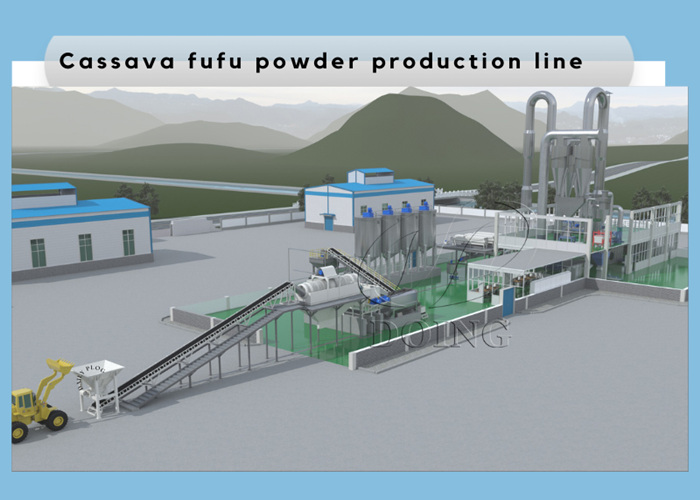 Fufu flour production line
2. Time Comparison:
Pre-crushing fermentation can take anywhere from 24 hours to several days, depending on the temperature and microbial activity.
It typically adds to the overall production time but can improve the quality of the final product.
3. Cost Comparison:
While it may not significantly reduce the direct material costs, pre-crushing fermentation can lead to better fermentation efficiency and potentially reduce the need for additives or enzymes in the subsequent steps.
Post-Crushing Fermentation Tank Fermentation
1. Process Overview:
After crushing the raw materials, the resulting pulp is transferred to a fermentation tank.
Here, controlled conditions (such as temperature, pH, and agitation) are maintained to optimize microbial growth and fermentation.
The lactic acid bacteria continue to break down starches, producing lactic acid, which gives fufu its characteristic sour taste and texture.
2. Time Comparison:
Post-crushing fermentation in a tank is typically shorter than pre-crushing fermentation, as the process is more controlled and efficient.
Depending on the desired final product, the fermentation time in the tank can range from a few hours to a day or two.
3. Cost Comparison:
The use of a fermentation tank requires initial investment in equipment but can lead to more consistent and efficient fermentation.
It may also reduce labor costs and the need for extensive monitoring during the fermentation process.
Fufu Production Line
The fufu production line typically involves the following steps:
1. Raw Material Preparation: The tubers are cleaned, peeled (if necessary), and sliced or grated.
2. Crushing: The prepared tubers are crushed to form a pulp.
3. Fermentation: Depending on the chosen method, the pulp undergoes either pre-crushing fermentation or is directly transferred to a fermentation tank for post-crushing fermentation.
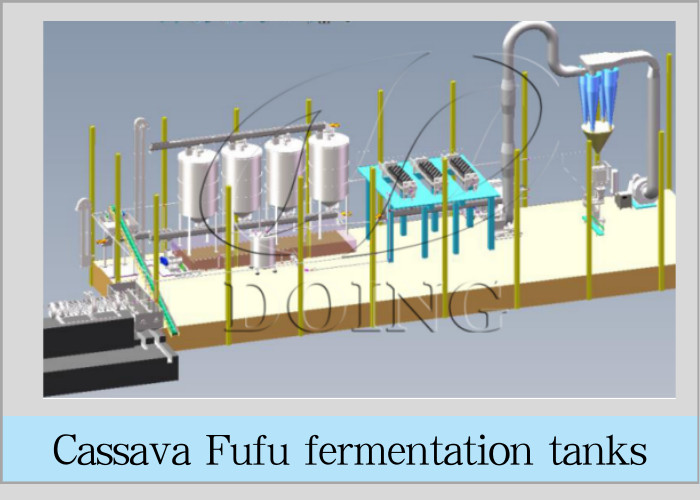 Fufu fermentation tanks
4. Drying: The fermented pulp is dried to remove excess moisture, often using solar drying or mechanical dryers.
5. Packaging: The dried fufu is packaged and labeled for sale.
By incorporating either pre-crushing or post-crushing fermentation into the production line, manufacturers can produce fufu with varying textures, flavors, and nutritional profiles to cater to different consumer preferences.
contact us
- Do you want to buy machine?
- Yes, I want to buy machine
- No, I want to learn more in advance.
- What is your raw material?
- Cassava
- Potato
- Sweet potato
- Other:
- What is the final product you want to produce?
- Chips
- Flour
- Starch
- What is the final product you want to produce?
- Garri
- Cassava flour
- Cassava starch
- Cassava chips
- Attiekie
- Bammy
- Other:
- What is your planned capacity for final product?
- <1 ton per day
- 1 ton per day
- 2 tons per day
- 3 tons per day
- 3-10 tons per da
- 10-20 tons per day
- >20 tons per day
- What is the usage of your cassava chips?
- Food usage (like fried chips, flour)
- Industrial usage (like animal feeds, ethanol)
- What is your planned capacity for final product?
- <5 ton per hour
- 5-10 tons per hour
- >10 tons per hour
- What is your planned capacity for final product?
- <500 kg per hour
- 0.5-5 ton per hour
- 5-10 ton per hour
- >10 ton per hour
- What is your planned capacity for final product?
- <300 kg per hour
- 300-1000 kg per hour
- 1-5 ton per hour
- 5-10 ton per hour
- >10 ton per hour

 Call us
 Chat online


