


Is the Fufu Flour Processing Business Profitable?
Fufu flour is a popular staple food in West Africa. In countries like Nigeria and the Democratic Republic of Congo, more and more people are starting fufu flour processing businesses. But before making the investment, many ask a very practical question: Is the Fufu Flour Processing Business Profitable?
Today, Henan Jinrui, as a professional cassava processing equipment manufacturer, is here to answer that question in detail. We’ll help you understand the real profitability of fufu processing, identify where profit leaks often happen in traditional methods, and give you practical advice to get started—so you can build a truly profitable fufu flour business.
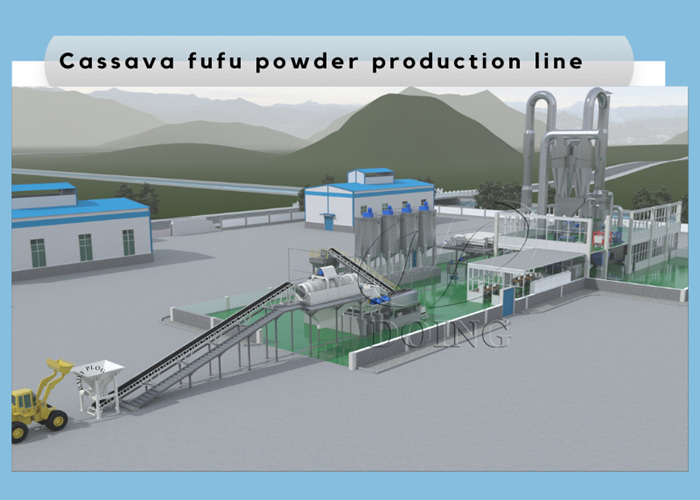 Fufu flour processing line
Fufu Flour Processing Is Profitable – Here’s the Real Number
Yes, it is profitable. Let's look at what that actually looks like in practice.
Take the conversion rate first. With proper equipment, 1,000 kg of fresh cassava yields roughly 300 kg of finished fufu flour — that's a solid 30% output rate. A well-designed fufu flour processing line, such as those from Henan Jinrui, can achieve this high extraction rate consistently. That means less waste and more profit from the same raw material. In terms of speed, even a compact setup can produce 300 kg of finished fufu flour per hour. That shows how efficiently a small line can run. When you combine high extraction with fast throughput, the daily revenue easily exceeds daily operating costs by a healthy margin.
After covering fresh cassava, labor, electricity, water, and packaging, a well-managed small fufu flour processing plant can expect a net profit margin between 20% and 35%. Most small fufu flour plants recover their initial equipment investment within 6 to 10 months. After that, it's mostly profit — as long as you keep your process consistent and minimize waste.
So yes, the fufu flour processing business itself is profitable. But here's the catch — those healthy margins only hold up if you avoid the common money leaks. And traditional methods have several.
 Traditional fufu flour drying
What Causes Profit Leakage in a Traditional Fufu Processing Business
You now know that a well-run fufu flour processing business can generate healthy margins — typically 20% to 35% net profit, with equipment paying for itself in under a year. But here’s the reality: many small-scale fufu processors using traditional methods fail to capture those profits. Why? Because a traditional fufu flour processing business often suffers from three hidden profit leaks.
1. Inconsistent drying: Sun drying is common but risky. A sudden rain or uneven moisture leads to mold and spoilage. In a traditional fufu flour processing business, 15–25% of the product is lost to drying problems alone.
2. Low extraction rate: Repurposed grain mills struggle with cassava fibers, leaving usable starch in the waste. While proper equipment achieves 75–80% extraction, traditional methods get only 60–65%. That 10–15% gap is pure profit lost from your fufu flour processing business.
3. Poor packaging: Ordinary bags let in moisture and pests, causing clumping or spoilage within months. This forces a traditional fufu flour processing business to sell cheaply and locally, missing out on urban or export markets where fufu flour commands higher prices.
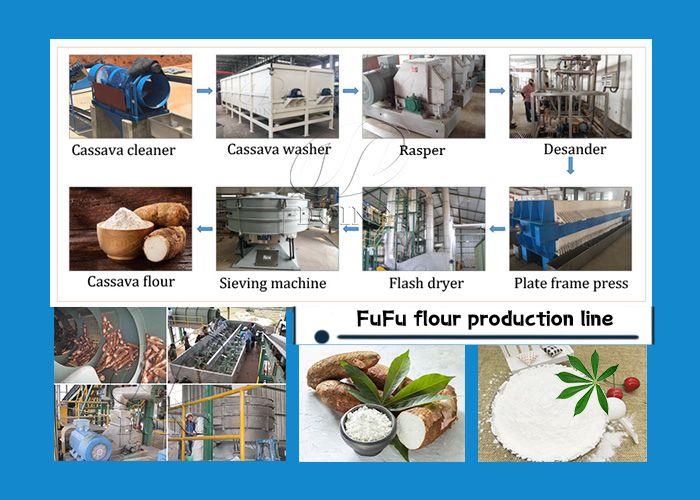 Fufu flour processing machine
Practical Guide: How to Start a Profitable Fufu Flour Processing Business
You don’t have to start big. Starting small — but with the right method — is the safest way to build a profitable fufu flour business.
Step 1: Secure cassava supply
Know where your fresh cassava will come from every day. Cassava spoils within 48 hours of harvest. Work with local farmers or set up a small collection point.
Step 2: Choose complete fufu flour line
Don’t piece together mismatched machines. A small integrated line from a trusted manufacturer — like Henan Jinrui’s complete fufu flour processing equipment — gives you everything you need: washing, peeling, grinding, dewatering, drying, and packaging. It solves the drying and extraction problems mentioned above, all in one reliable setup. This compact line pays for itself quickly through lower losses and higher output.
Step 3: Test locally before scaling up
Start with restaurants, small shops, or schools near you. Track your waste rate and listen to customer feedback. Once waste stays below 8%, you’re ready to grow.
Step 4: Think beyond your local market
Branded fufu flour — with clean packaging and consistent quality — can sell for 30% more. Diaspora buyers in Europe or North America often pay much higher prices.
So, is the fufu flour processing business profitable? The answer is clearly yes — but only when you address the three profit leaks we discussed: inconsistent drying, low extraction rates, and poor packaging. Traditional methods can work, but they often leave money on the table without you even noticing.
Starting small with a complete, reliable processing line — like Henan Jinrui’s compact fufu flour equipment — helps you avoid those leaks from day one. You get higher output, less waste, and a product that can reach better markets. If you’re serious about starting or upgrading your fufu flour processing business, contact Henan Jinrui now for a simple equipment recommendation and a basic profit estimate.
contact us
- Do you want to buy machine?
- Yes, I want to buy machine
- No, I want to learn more in advance.
- What is your raw material?
- Cassava
- Potato
- Sweet potato
- Other:
- What is the final product you want to produce?
- Chips
- Flour
- Starch
- What is the final product you want to produce?
- Garri
- Cassava flour
- Cassava starch
- Cassava chips
- Attiekie
- Bammy
- Other:
- What is your planned capacity for final product?
- <1 ton per day
- 1 ton per day
- 2 tons per day
- 3 tons per day
- 3-10 tons per da
- 10-20 tons per day
- >20 tons per day
- What is the usage of your cassava chips?
- Food usage (like fried chips, flour)
- Industrial usage (like animal feeds, ethanol)
- What is your planned capacity for final product?
- <5 ton per hour
- 5-10 tons per hour
- >10 tons per hour
- What is your planned capacity for final product?
- <500 kg per hour
- 0.5-5 ton per hour
- 5-10 ton per hour
- >10 ton per hour
- What is your planned capacity for final product?
- <300 kg per hour
- 300-1000 kg per hour
- 1-5 ton per hour
- 5-10 ton per hour
- >10 ton per hour

 Call us
 Chat online


