Home>FAQ>How Many Tons of Potatoes Make 1 Ton of Starch? How to Start a Profitable Potato Starch Processing Business?
How Many Tons of Potatoes Make 1 Ton of Starch? How to Start a Profitable Potato Starch Processing Business?
How many tons of potatoes make 1 ton of starch? Generally speaking, the answer ranges from 5 to 10 tons. In actual industrial production, the material consumption ratio is not fixed – it varies based on raw material quality and the technical level of the equipment used.
For common table potatoes – These are the most widely available varieties used for everyday cooking. Their starch content typically ranges from 10% to 18%. Approximately 6 to 10 tons of such potatoes are required to produce 1 ton of qualified dry potato starch, depending on the specific variety and growing conditions.
For high-starch special potato varieties – These are specifically bred for industrial starch production, with starch content exceeding 20%. Only about 5 tons of these potatoes are enough to make 1 ton of starch. This is the most efficient and cost effective option for a potato starch processing plant.
Additionally, processing losses during washing, crushing, separation, and drying can slightly increase raw material usage. High efficiency equipment can reduce these losses by 5–10%, directly improving your yield. For stable factory operation, the most reasonable standard production ratio is 7.5 tons of potatoes to 1 ton of starch – a benchmark widely adopted by the potato starch processing plants.
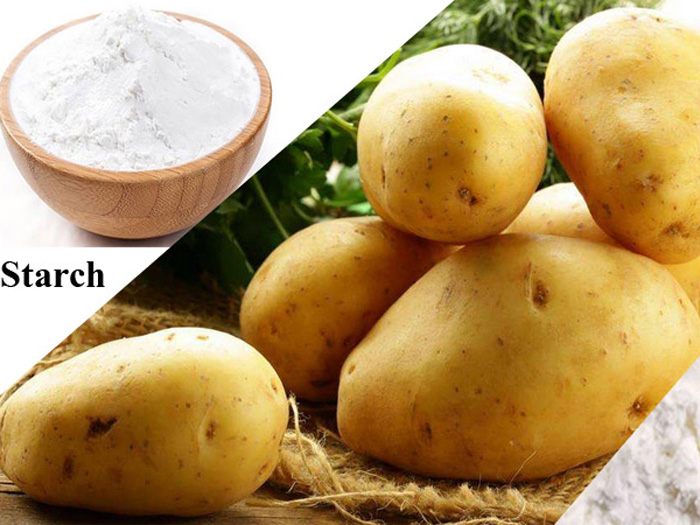 High quality potato starch
But knowing the starch yield is only the first step. As for how to start a profitable potato starch processing business, the key lies in getting four core aspects right: securing raw material supply, planning a small-scale startup, choosing the right equipment, and training your workers. Each step builds on the previous one – miss any link, and problems will follow. So how exactly do you do it? Jinrui Foodtech will provide you with detailed guidance.
Step 1: Secure a Reliable Raw Material Supply
Without potatoes, a potato starch processing plant cannot operate. Before purchasing any equipment, ensure a stable supply of high-starch potatoes. Choose high-starch varieties with a starch content of 18-20% or higher—they only require 5 tons of potatoes to produce 1 ton of starch, while ordinary table potatoes require 7-9 tons. This directly reduces raw material costs and increases profits.
Remember this golden rule: Do not invest in any equipment until you have secured supply agreements for at least 70% of your annual potato demand. Secure the potatoes first, then start a profitable potato starch processing business. Getting the order right is half the battle won.
Step 2: Small-Scale Startup & Budget Planning
Newcomers shouldn't rush into building large potato starch processing plants. A small-scale potato starch processing plant processing 5-10 tons of potatoes per day (producing 0.75-1.5 tons of starch daily) is the safest starting point—low risk, quick return on investment, learning on the job, room for expansion, and sufficient coverage of the local market and small buyers.
How to allocate the budget? Equipment accounts for 60-70%, factory space 10-15%, raw materials for the first three months 10-15%, labor and utilities 5-10%, and licenses and contingency funds 5-10%. A clear budget ensures a smooth transition.
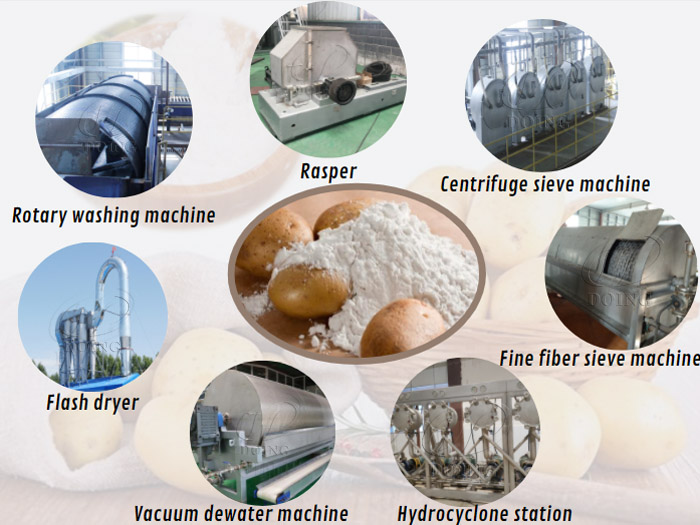 The right equipment of potato starch processing
Step 3: Choose the Right Equipment
Choosing the right equipment is half the battle won in terms of output and quality. Beginners don't need a full industrial-grade production line, but the following five core pieces of equipment are indispensable:
Rasper – Crushes potatoes into a fine paste with a crushing rate of over 96%. The more thorough the crushing, the more fully the starch is released, directly determining your starch yield.
Centrifuge Sieve – Separates starch from the fiber. This step is the core of the entire line; the extraction rate directly affects your output and profit.
Multi-stage Hydrocyclone – Concentrates and purifies the starch paste to 22°Bé, removing fine sand and impurities. The equipment determines the whiteness and fineness of the starch—higher whiteness and fewer impurities mean a better selling price.
Flash dryer – reduces moisture content to 10-12% within seconds, meeting safe storage standards. The fully enclosed system eliminates dust and pest contamination, ensuring stable starch quality.
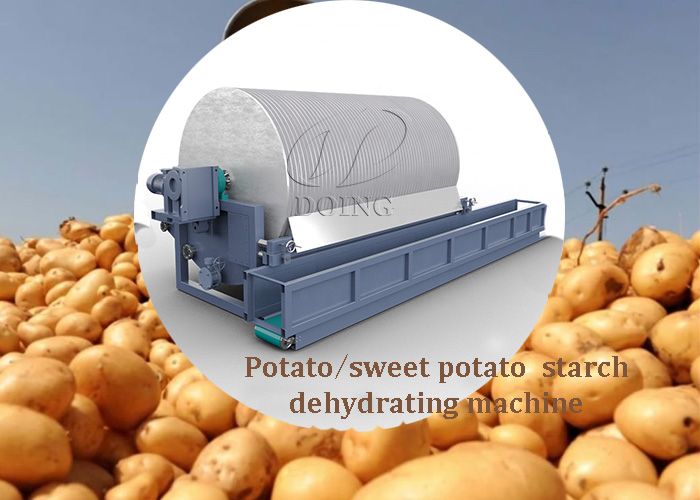 Jinrui Foodtech potato starch dehydrating machine
Jinrui Foodtech's potato starch processing equipment is made of 304 stainless steel, boasting high crushing rate, excellent extraction efficiency, and low energy consumption. We can provide you with professional processing equipment.
Step 4: Train Your Workers
Buying equipment doesn't guarantee profits. The same machine can yield a 5-10% difference in starch output between skilled and novice operators. Training is simple: how to start and stop the equipment, how to adjust key parameters, and daily cleaning and maintenance. Spending a few days training your workers after the equipment arrives is the most worthwhile investment.
Start a profitable potato starch processing business from these four steps: securing raw materials, starting small, selecting the right core equipment, and training skilled workers. Jinrui Foodtech provides a complete set of potato starch processing equipment—from rasper to flash dryer—all made of 304 stainless steel, ensuring durability and compliance with food safety standards. We are happy to assist you if needed.
contact us
- Do you want to buy machine?
- Yes, I want to buy machine
- No, I want to learn more in advance.
- What is your raw material?
- Cassava
- Potato
- Sweet potato
- Other:
- What is the final product you want to produce?
- Chips
- Flour
- Starch
- What is the final product you want to produce?
- Garri
- Cassava flour
- Cassava starch
- Cassava chips
- Attiekie
- Bammy
- Other:
- What is your planned capacity for final product?
- <1 ton per day
- 1 ton per day
- 2 tons per day
- 3 tons per day
- 3-10 tons per da
- 10-20 tons per day
- >20 tons per day
- What is the usage of your cassava chips?
- Food usage (like fried chips, flour)
- Industrial usage (like animal feeds, ethanol)
- What is your planned capacity for final product?
- <5 ton per hour
- 5-10 tons per hour
- >10 tons per hour
- What is your planned capacity for final product?
- <500 kg per hour
- 0.5-5 ton per hour
- 5-10 ton per hour
- >10 ton per hour
- What is your planned capacity for final product?
- <300 kg per hour
- 300-1000 kg per hour
- 1-5 ton per hour
- 5-10 ton per hour
- >10 ton per hour

 Call us
 Chat online